How Calling Cards Actually Worked
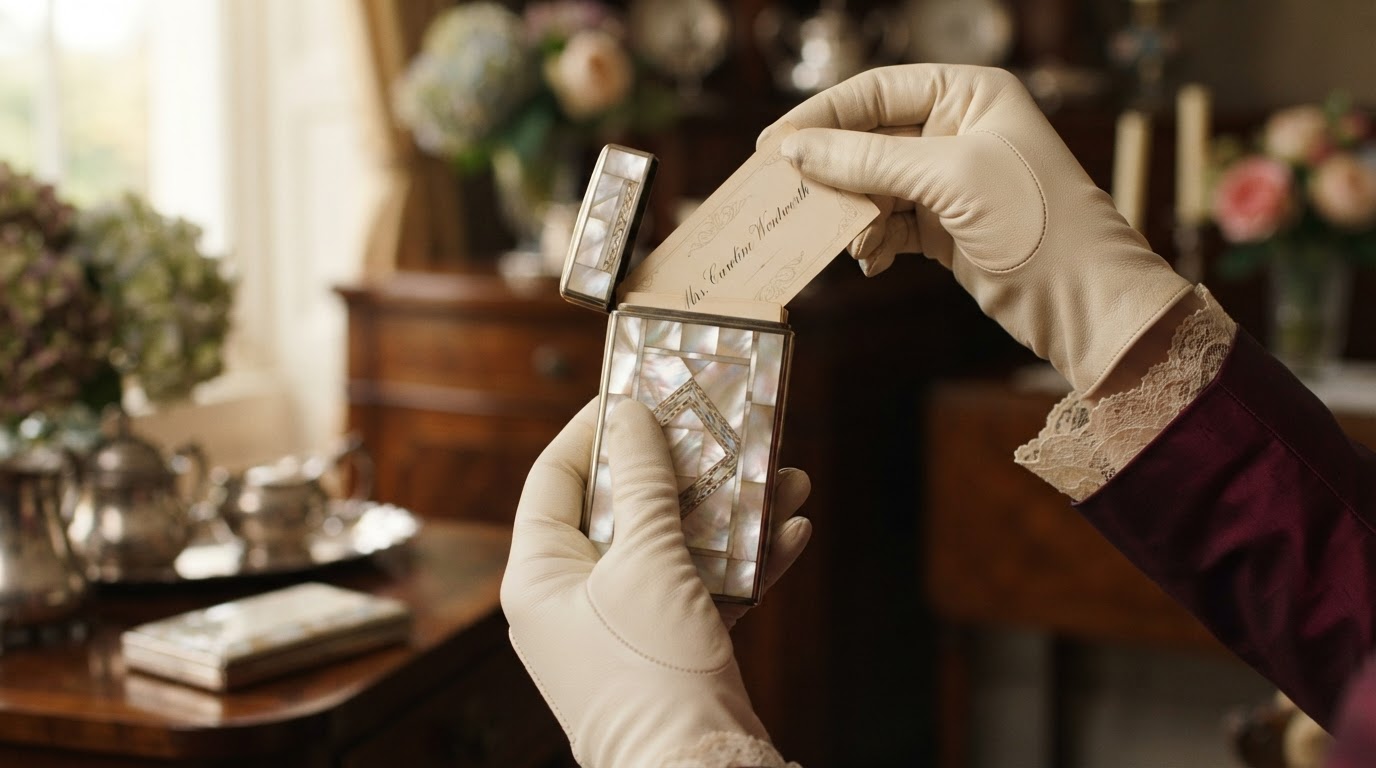
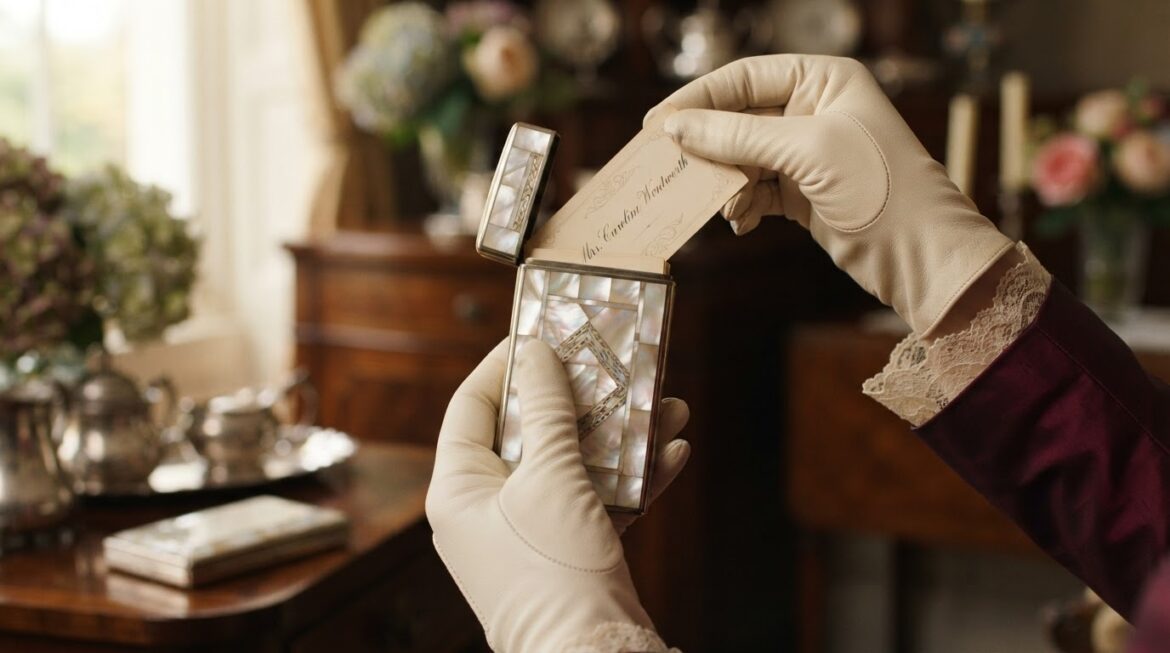
It is three o’clock on an afternoon in 1887.
Imagine arriving at an acquaintance’s home in the late nineteenth century. Instead of simply knocking and expecting to be received, you might present a small engraved card bearing your name. A servant carried it inside, where the person being visited could decide whether to receive you. If she was unavailable or not receiving callers, the card might remain behind as evidence that you had paid the call.
That small exchange belonged to a much larger culture of visiting. Calling cards, also known as visiting cards, helped households manage introductions, return visits, invitations, farewells, congratulations, condolences, and the social obligations connecting families and acquaintances.
A Name Small Enough to Carry
Calling cards were often surprisingly modest. Many surviving nineteenth century examples are only around one and a half by three inches. Some contain little more than an engraved name, while others include addresses, ornament, handwriting, or professional information. The American Antiquarian Society preserves more than 600 examples, ranging from professionally engraved and letterpress cards to pieces made by hand.
Their small size makes them easy to overlook, but that is precisely what makes them wonderful pieces of material culture. Lettering, paper, decoration, handwriting, folds, wear, addresses, and occupations can reveal far more than the printed name alone.
What Happened When You Came Calling?
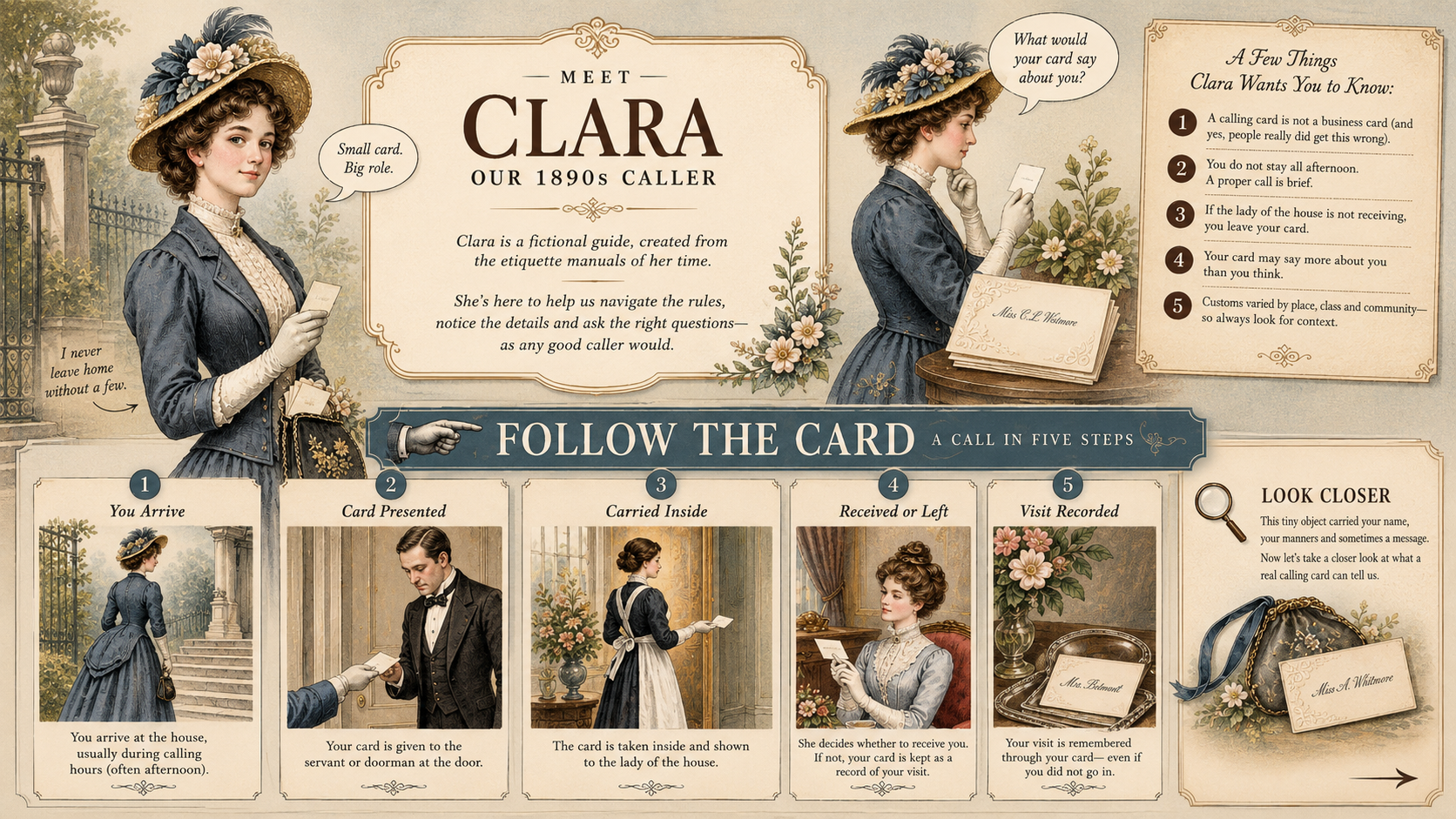
Clara is fictional, but the ritual she demonstrates comes from period etiquette sources. A caller arrived with cards in hand, presented one at the door, and waited while it was carried inside. If the visit took place, it was generally expected to remain fairly brief. One popular late nineteenth century etiquette guide considered roughly ten to twenty minutes sufficient for an ordinary call.
Leaving a card could still matter when the visit did not take place. Cards helped record attempted calls and remind a household that a social obligation might need to be returned. In an active household, they could become a remarkably practical paper record of relationships.
More Than a Printed Name
Etiquette manuals describe systems in which the treatment of a card could convey additional meaning. One 1881 guide assigned meanings to turned corners for visits, congratulations, condolence, and leave-taking. The entire right end could indicate personal delivery.
These were fashions rather than permanent laws. Customs varied with time, place, class, and social circle, which is why one etiquette manual should never be treated as a universal description of nineteenth century life.
Social Card or Business Card?
The resemblance to a modern business card is obvious, but period etiquette treated the two differently. A social calling card represented a person within a social circle, while professional and trade cards could advertise occupations, businesses, locations, goods, or services. One etiquette guide explicitly warned against substituting a business card for a friendly social call. In effect, the two pieces of paper represented different versions of the same person: the social self and the commercial self.
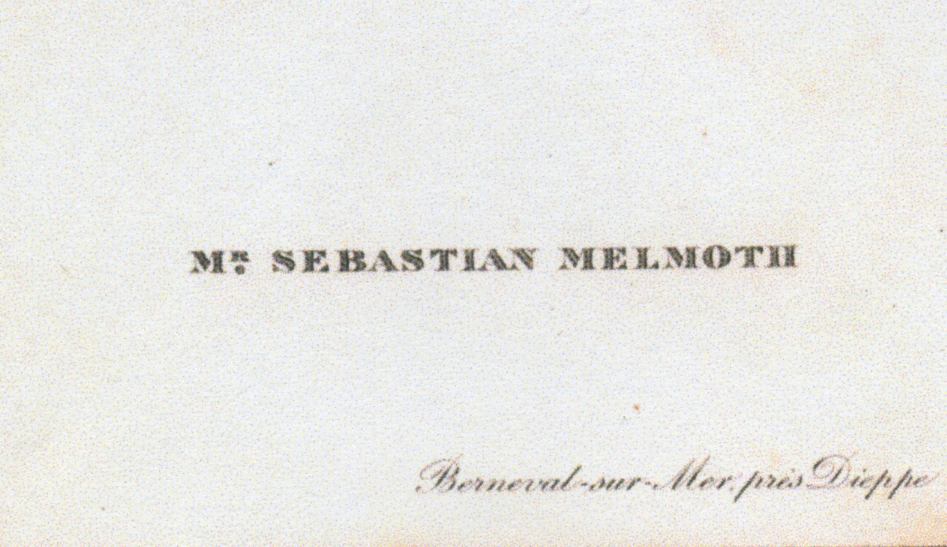
Oscar Wilde’s Other Name
One surviving visiting card belonged to Oscar Wilde, yet his famous name appears nowhere on it. After his release from prison in 1897, Wilde traveled under the name Sebastian Melmoth. The card is starkly simple, bearing that assumed name with an address written beneath it.
That transforms an ordinary social object into something more intimate. A calling card usually announced who someone was. This one became connected with privacy, reputation, reinvention, and the attempt to move through the world under another name.
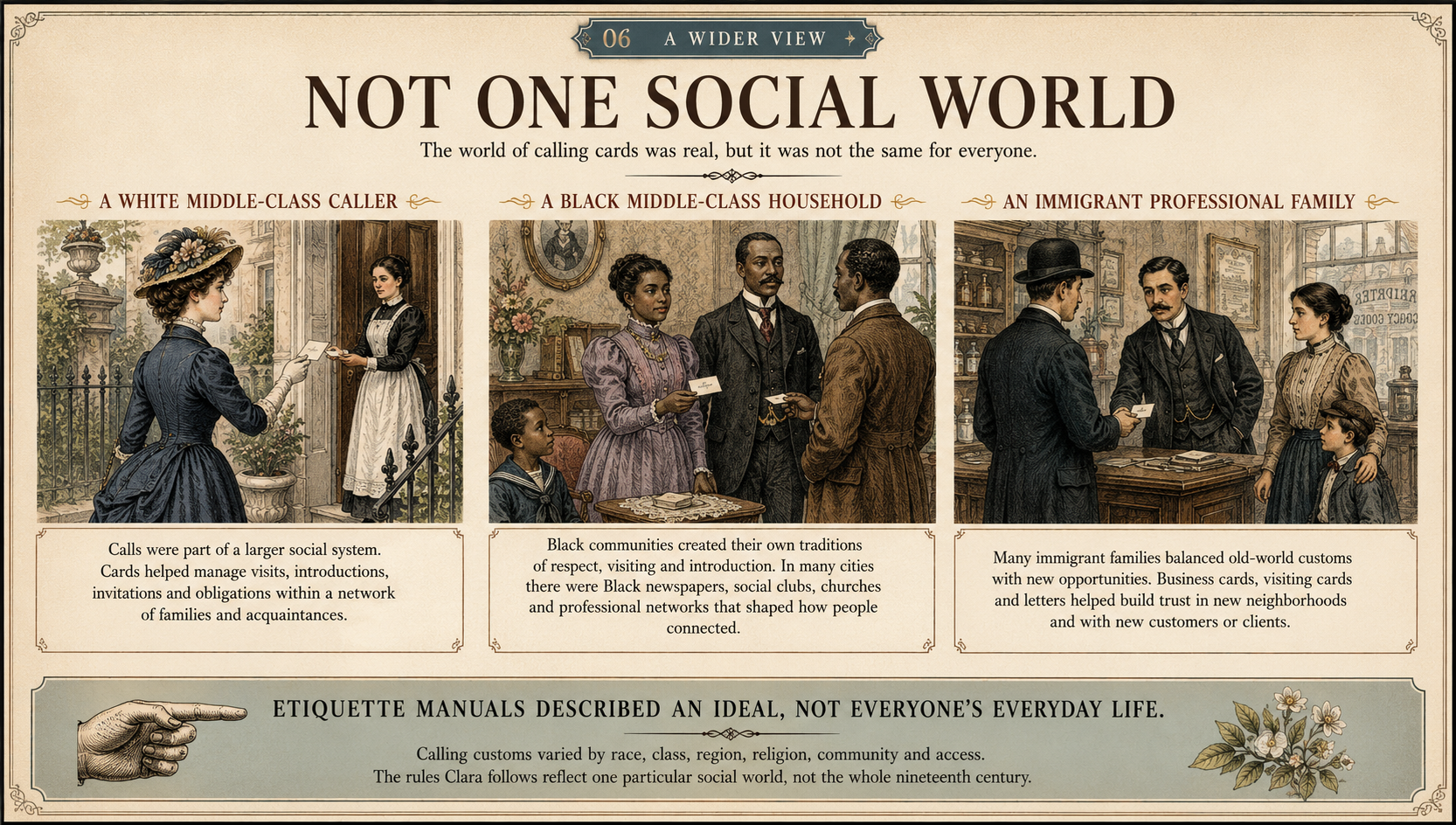
There Was Never One Nineteenth Century Experience
The polished world described in etiquette books represents only part of nineteenth century life. Formal calling practices were particularly associated with middle and upper class social circles, while race, class, religion, immigration, geography, occupation, household structure, and community tradition shaped how people actually formed relationships. Etiquette manuals are most useful when we read them for what they are: evidence of how particular writers believed people ought to behave, not a transcript of how everyone lived.
Reading an Ornate Calling Card
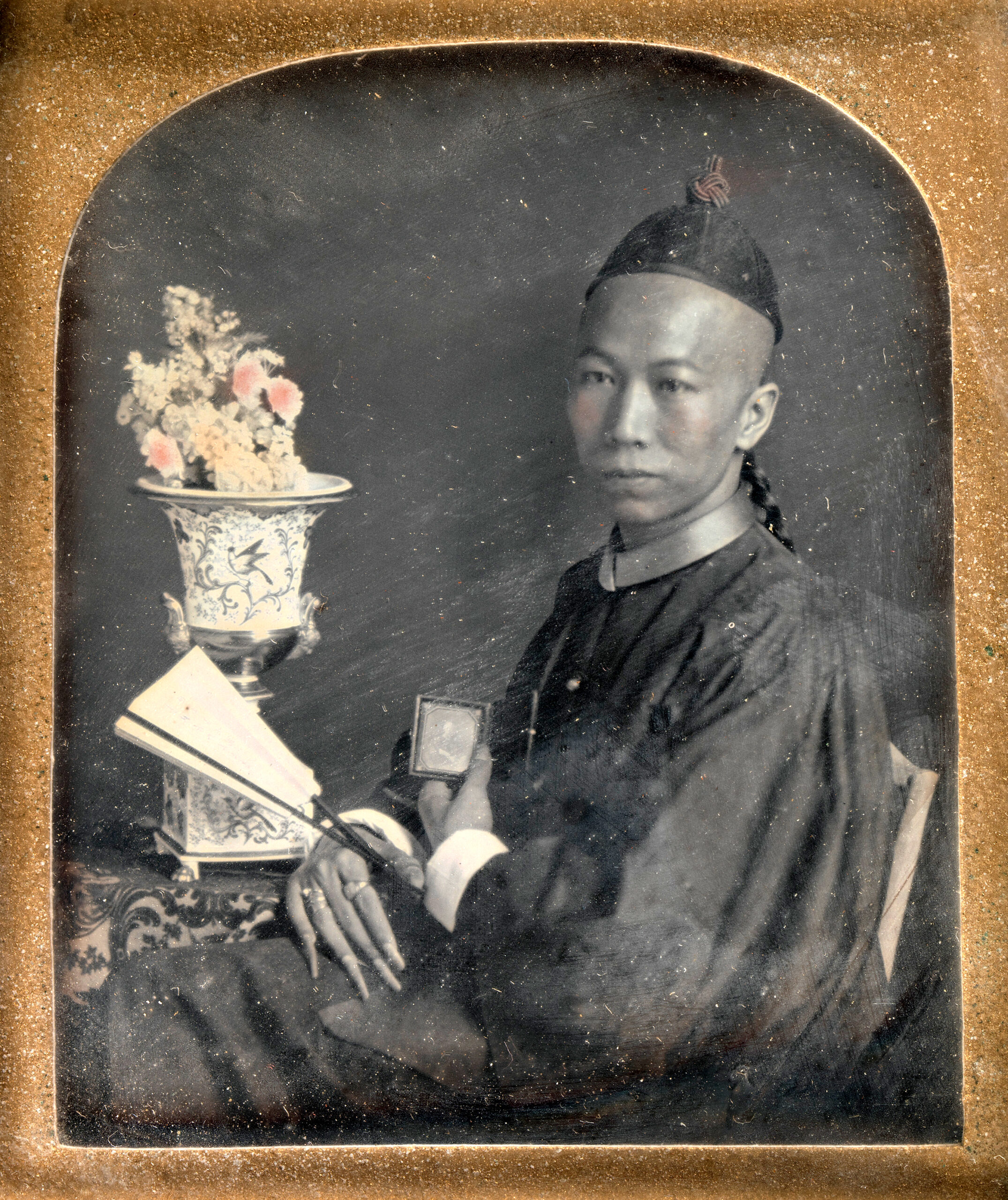
The Metropolitan Museum of Art
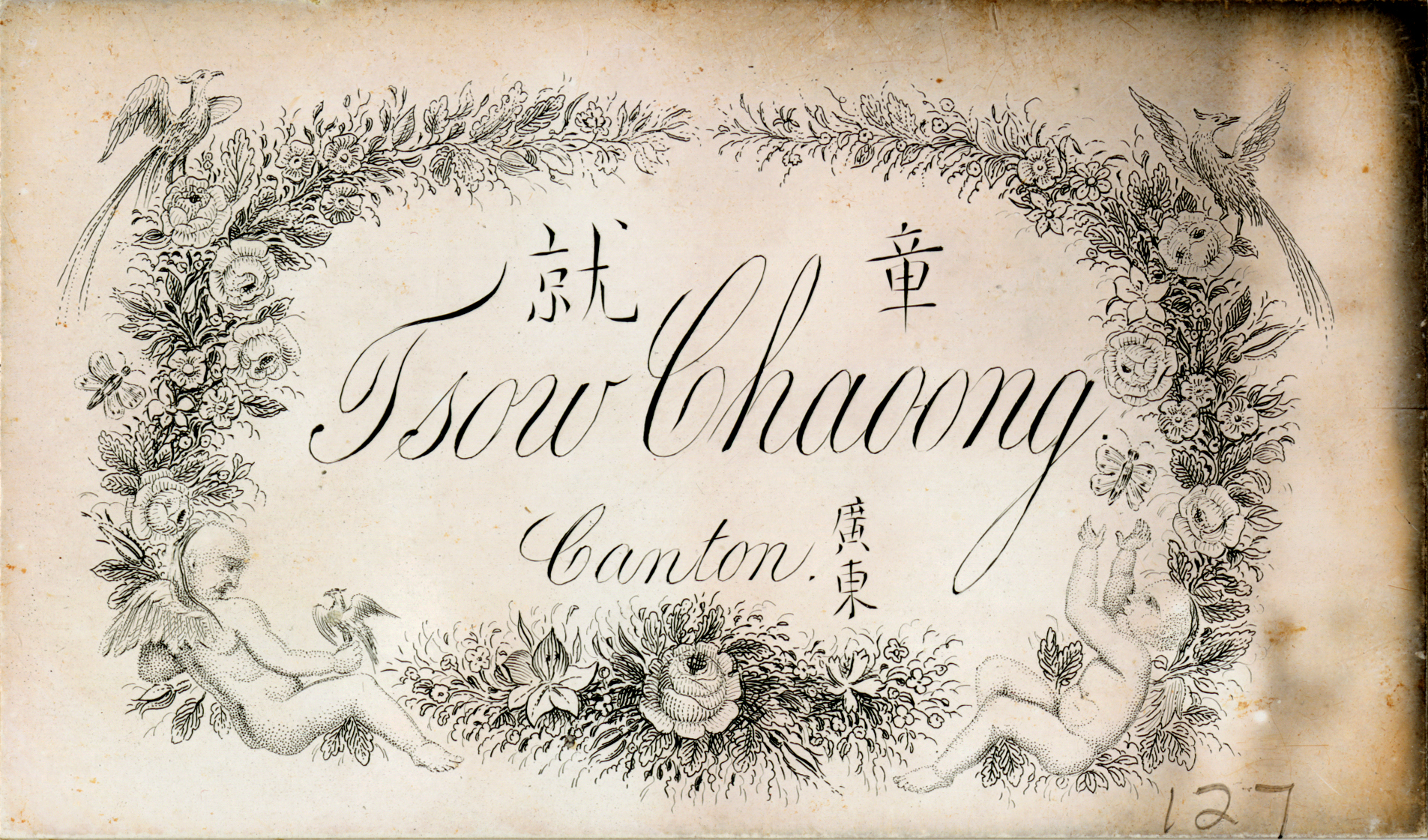
Library Company of Philadelphia
This elaborately engraved calling card belonged to
T’sow Chaoong, the “Writing Master” associated
with Boston’s Chinese Museum in the 1840s. Around his name,
flowers, birds, and cherubs turn a tiny practical object into
something designed to be noticed.
Chaoong also created customized cards for museum visitors,
recording their names and places of birth in Chinese characters.
Those personalized pieces were accompanied by his own calling card,
making this small object part of a much larger story of curiosity,
cultural exchange, and nineteenth century public entertainment.
At only a few inches across, the card shows just how much identity
could be packed into a very small piece of paper. Decoration,
lettering, language, and scale all become historical evidence.
What We Kept and What We Lost
Calling cards eventually gave way to telephones, modern business cards, address books, email, text messages, social media, and digital contact information. Our systems are faster and easier, but they leave behind very different traces.
There is no reason to romanticize all the rules surrounding formal visiting. Many reinforced social boundaries few of us would want restored. Yet the object itself still has appeal. A beautifully printed card made an introduction tangible. It transformed something as ordinary as a name into an object chosen, carried, exchanged, and sometimes saved. That may be the part worth borrowing.
FROM THE PAPER DRAWER
The Calling Card Collection
• ────────────── ⚿ ────────────── •
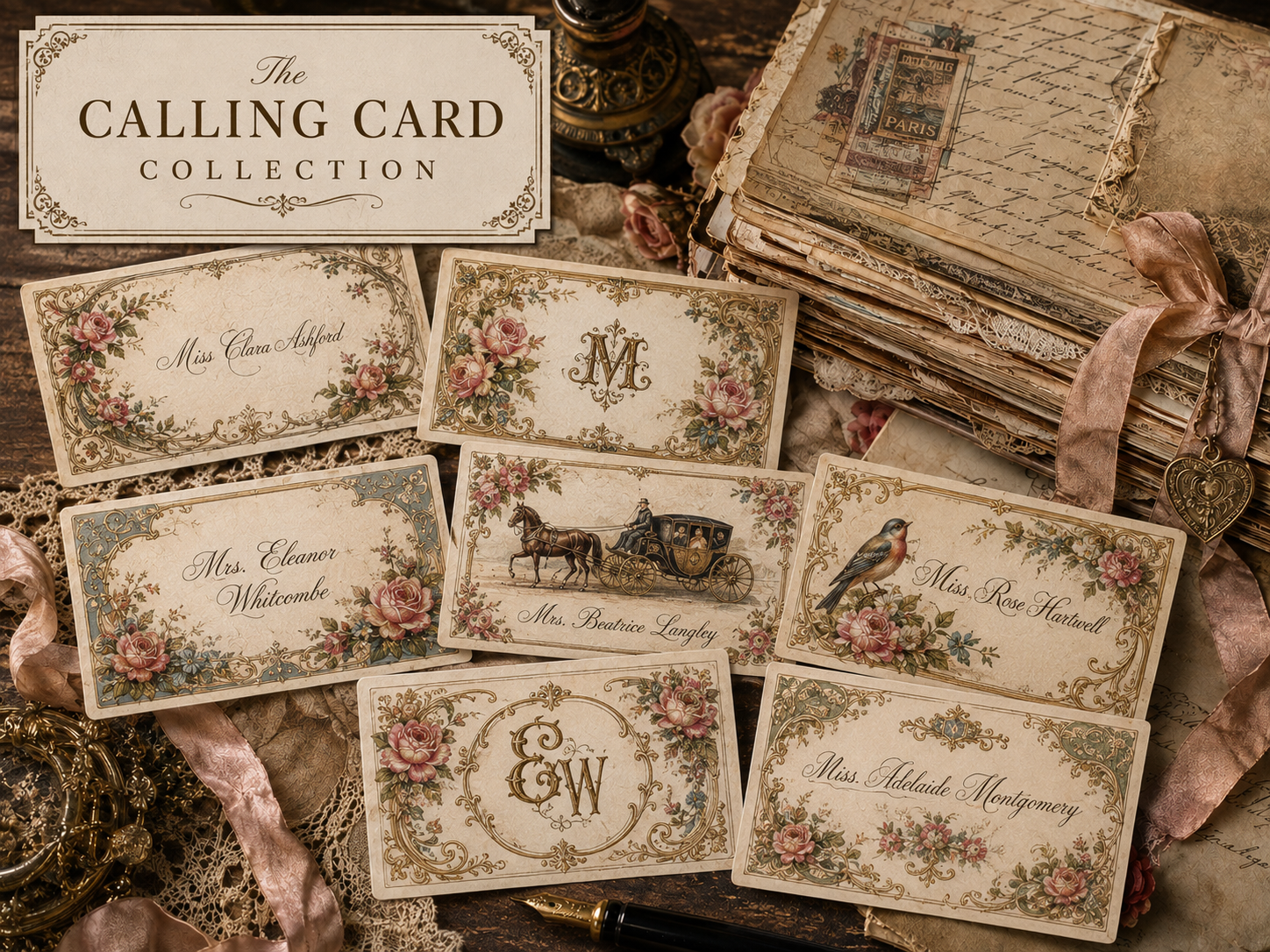
Inspired by richly decorated nineteenth century calling cards,
this collection brings together floral borders, birds, elegant
monograms, engraved names, and a horse and carriage design drawn
from the visual language of surviving period ephemera.
Created for modern printing, journaling, correspondence, and
keepsake projects, the finished collection will join the
Another Century Paper Drawer.
The Calling Card Collection
• ────────────── ⚿ ────────────── •
Inspired by surviving nineteenth century calling cards, this
collection brings the beauty of the visiting ritual back to paper.
The designs draw from historical engraving, ornament, typography,
and period examples while being created for modern printing and use.
The finished collection will join the Another Century Paper Drawer.
Comment 1
August 31, 2026 at 12:14 am
Hi, this is a comment.
To get started with moderating, editing, and deleting comments, please visit the Comments screen in the dashboard.
Commenter avatars come from Gravatar.